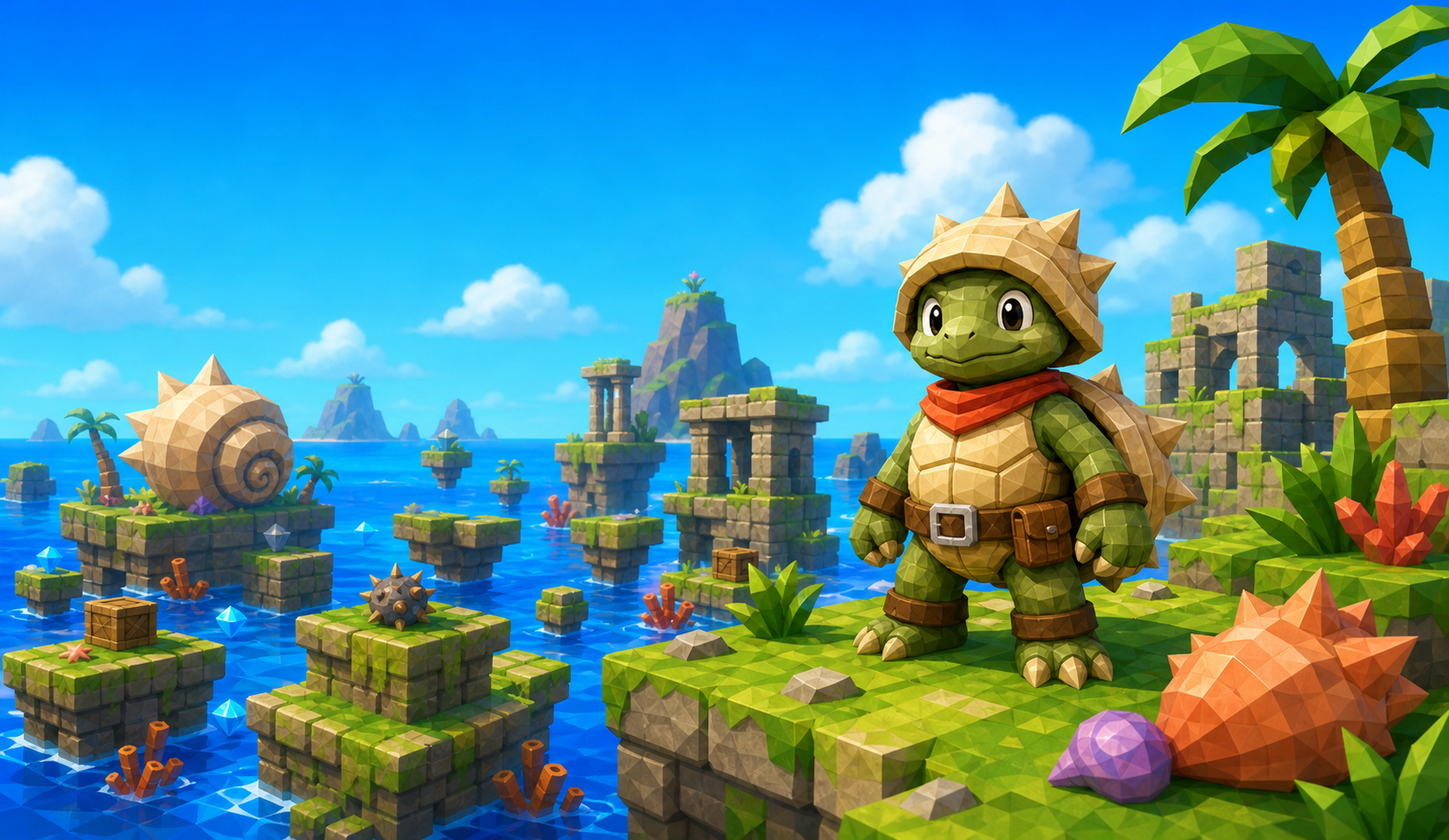
Shellbound is starting to find its shape.
The goal is bigger than just making the game. We want to build Shellbound while bringing people through the creative process with us. There are plenty of places to learn code, art, design, or production in isolation, but it is much rarer to watch a game take shape in public while the decisions are still messy and alive. That raw version of development is part of what this devlog is for.
At the center is a small turtle explorer wandering through bright coastal ruins, floating island paths, oversized shells, coral growth, little creatures, and strange old structures sitting out over the water. The game is meant to feel like a cheerful 3D platforming adventure from the console era where every ledge, crate, archway, and shiny object is quietly asking you to poke at it.
The short version is this: Shellbound is a 3D platformer inspired by the spirit of 90s-era platformers.
The Feeling
The target mood is colorful, chunky, and inviting. The world should feel playful before it feels dangerous. The ocean is bright. The ruins are old, but not grim. The shells are huge enough to feel magical. The platforms are readable from far away. The creatures should look like they belong in a toy box and a tide pool at the same time.
That old 3D platformer feeling matters here. Not as a direct imitation, but as a design promise: simple shapes, strong silhouettes, clear goals, satisfying collectibles, and spaces that invite wandering.
The Hero
The turtle hero changed the whole project.
The first version had charm, but leaned too much toward a little adventurer wearing shell armor. The newer direction is much better: green turtle head, beak-like snout, squat body, claws, sturdy feet, a big shell shape, and a red scarf that keeps the silhouette friendly and readable.
The shell is not just decoration. It is the visual idea of the game. It suggests safety, stubbornness, identity, and maybe eventually mechanics. A turtle already carries their home with them, and that gives Shellbound a simple emotional center without needing to over-explain it.
The current turtle adventurer is not final, and the design will almost certainly keep changing as we move through pre-production toward a vertical slice. But for now, this version gives the project a strong enough center to build around.
The World
The current structure is built around a classic hub world idea: a central place the player can return to between adventures. From there, we can send the player into different worlds, change the assets and tone from area to area, and still keep that home base as the place where progress gathers.
That hub matters because it gives the game a rhythm. Go out, explore, collect, learn something, come back, unlock something new, and then head out again.
The first world direction is coastal ruins and floating island spaces. Mossy stone blocks, broken archways, shell tokens, coral bounce pads, blue crystals, tide keys, tiny crabs, sleepy clams, and older turtle NPCs all point toward a place that feels half natural and half forgotten.
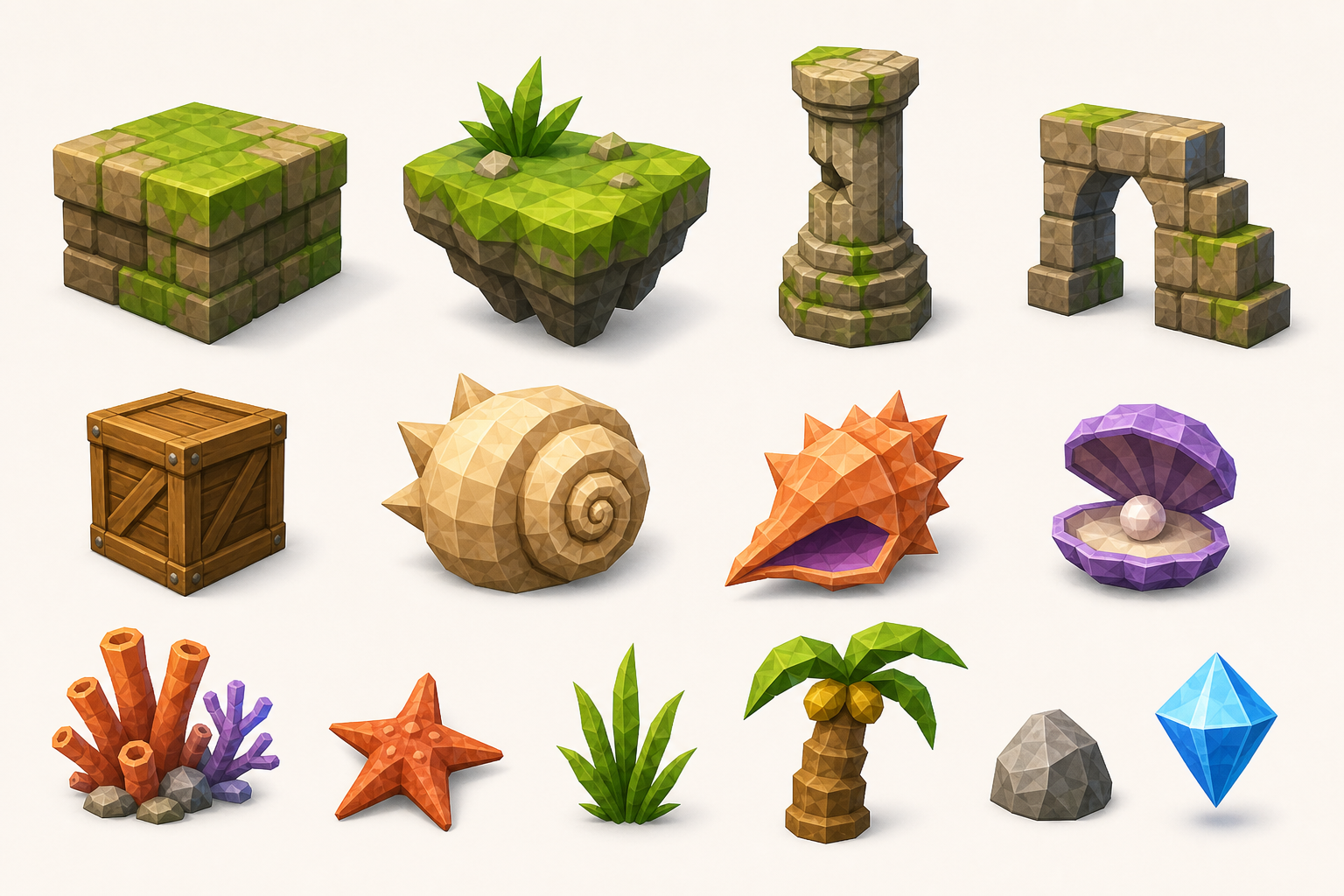
The world should be easy to understand at a glance. Grass means safe footing. Mossy stone means platforming. Blue crystals mean something worth reaching. Coral can suggest bounce, danger, or hidden paths depending on how it is shaped. Big shells can be props, landmarks, pickups, homes, or clues.
Design Pillars
These are the early pillars I keep coming back to:
- Readable movement: the player should understand jumps, gaps, slopes, and landing spots without fighting the camera or the art.
- Chunky worlds: assets should be simple enough to model, arrange, and recognize quickly.
- Collectible curiosity: if something shines, sits on a ledge, hides behind a shell, or peeks out from a ruin, the player should want to go check it. Each world should feel like a collection of points of interest. We will find the story along the way, but exploring the space is the main goal.
- Friendly mystery: the game can have old ruins and secrets without becoming dark or heavy. The hub world structure also gives us room to try different kinds of places over time. If something feels off, we can reevaluate it while we are still in pre-production. Once we move beyond the vertical slice and into heavier production, the goal will be to avoid major changes unless they are truly necessary.
- Turtle identity: the hero should feel like a turtle in motion, in silhouette, and eventually in mechanics. Right now, the basics are running and jumping, but the goal is to make the movement feel more turtle-specific. A shell charge is the obvious first idea: pulling into the shell, spinning forward, knocking down enemies, and maybe opening secrets. We will see what fits as the design and timeline become clearer.
What Comes Next
The next useful step is turning the world language into a first island kit: a small set of reusable platforms, edges, columns, shells, plants, pickups, and hazards that can make a tiny playable space.
Once that kit exists, the devlog can shift from broad direction into more concrete questions: how the turtle moves, what the first collectible loop feels like, what makes an island fun to cross, and what the shell can actually do.
For now, the important thing is that Shellbound has a clearer promise: a bright little turtle adventure about exploring coastal ruins, chasing shiny things, and carrying home on your back.